
The timing of Jurgen Klopp leaving Liverpool
Did Jurgen Klopp made the right decision to announce him stepping down as the manager of Liverpool midway through the season?


The backstory
The 2024 summer is here, and for avid football fans, that means one thing: international tournaments are just around the corner. With the conclusion of local European football leagues, players are now preparing to represent their countries in the upcoming Euro 2024 and Copa America tournaments. These events will unfold over the coming weeks, followed shortly by the Olympics. After the summer's international action, players will return to their clubs for pre-season matches, gearing up for the start of the domestic football season in August.
Before the international football tournaments begin, let's take a moment to reflect on the domestic football season that just concluded. Notably, something intriguing transpired at Liverpool F.C. in the English Premier League. If you regularly follow English or European football, you likely know that this past season marked Jurgen Klopp's final tenure as the manager of Liverpool F.C.
On January 26, 2024, at 10 am, what started as a regular Friday morning took an unexpected turn when the club announced that Jurgen Klopp would be leaving Liverpool at the end of the season. This came as a shock, surprise, and disbelief to many Liverpool fans. After having spent eight-and-a-half transformative years as the manager of Liverpool, the thought of him no longer being in the Liverpool dugout felt impossible to comprehend. No one saw it coming, as many expected him to remain at Liverpool for the years to come.
Jurgen Klopp's final season in charge of Liverpool was undoubtedly a rollercoaster ride, marked by emotional departures, thrilling victories, and painful defeats. Liverpool fans had hoped for a golden sunset for Klopp, envisioning a historic quadruple of trophies. However, that dream fell short as Liverpool only managed to secure the League Cup in his final season.
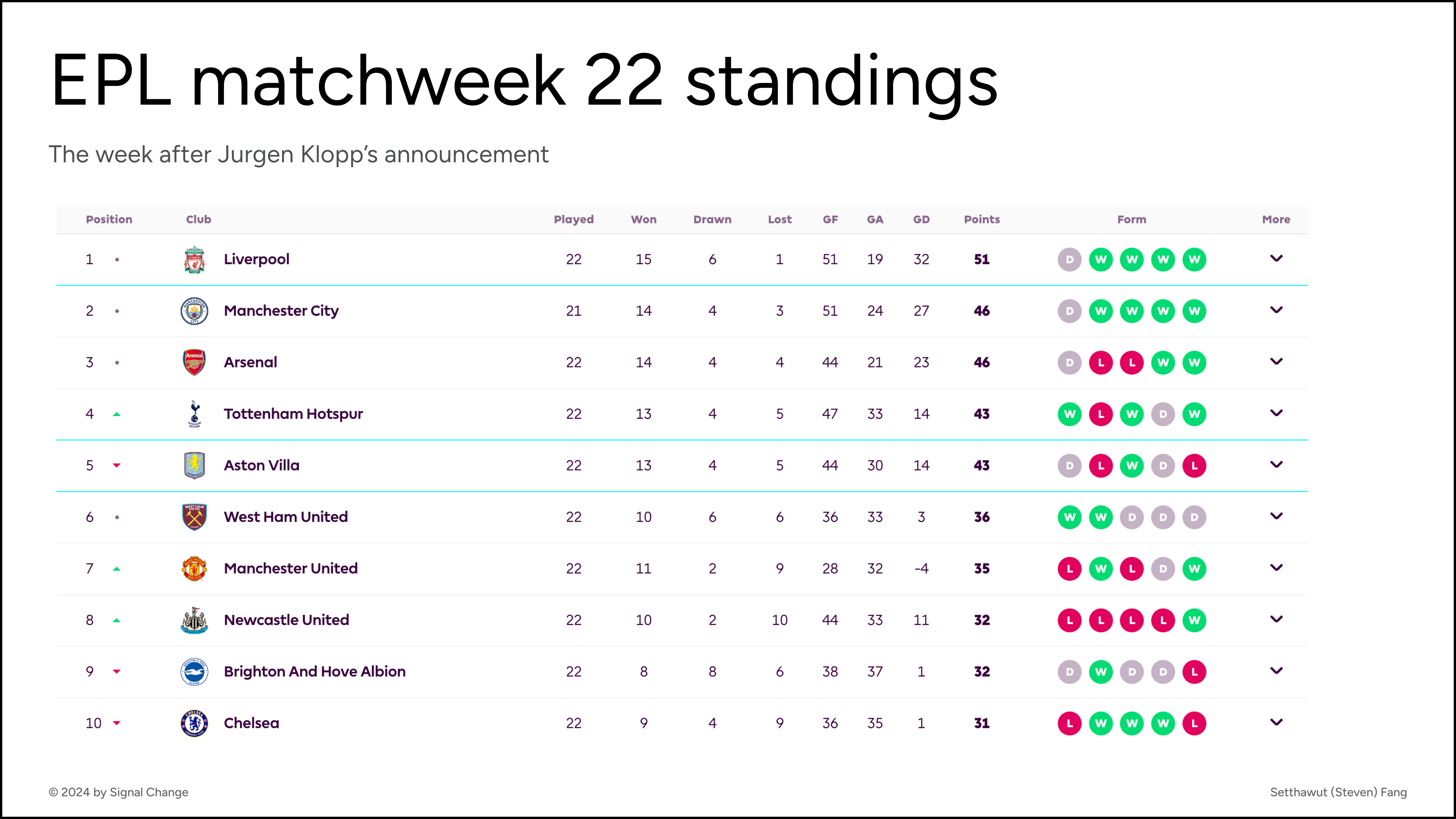
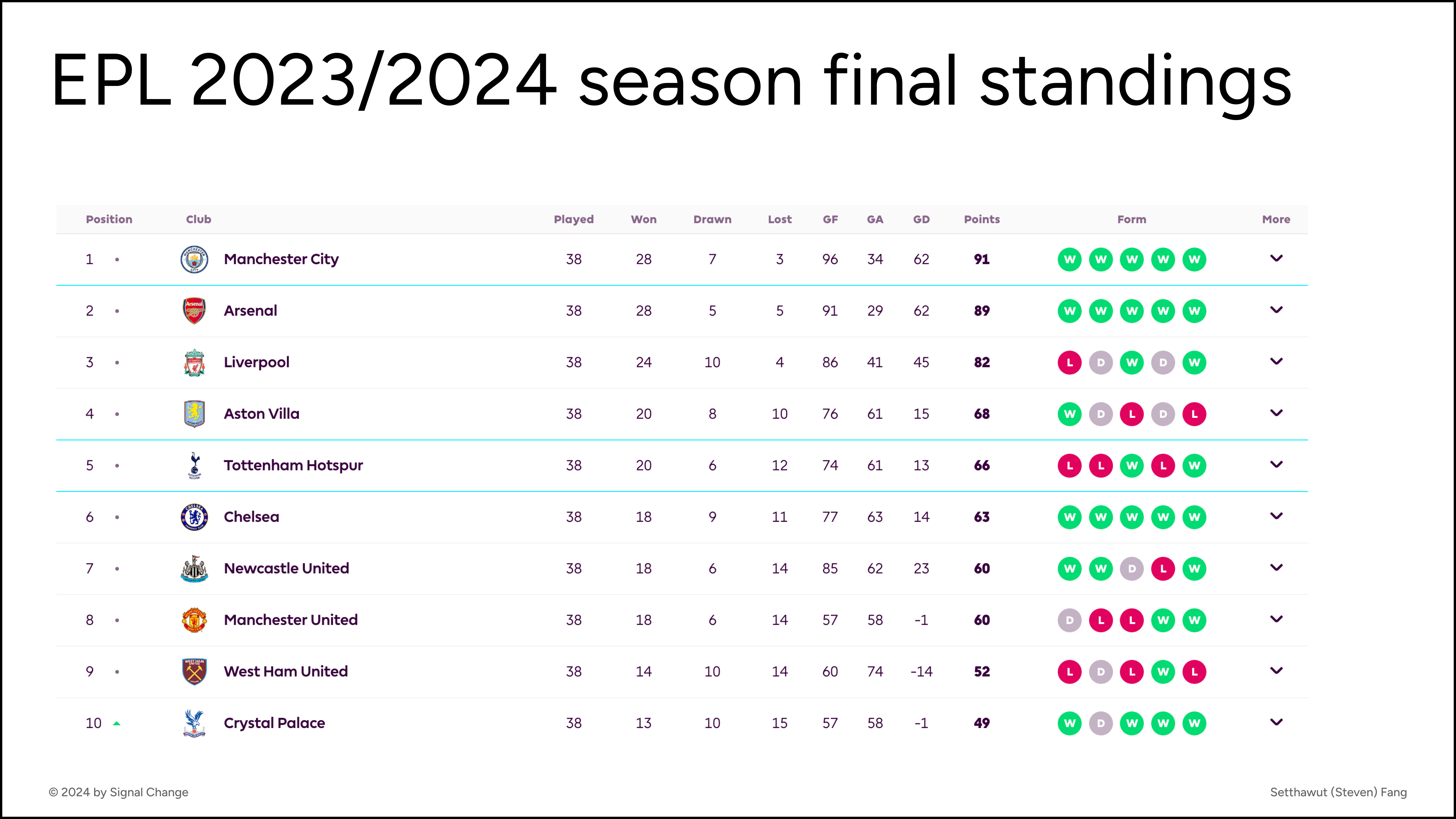
At the time of Klopp’s announcement that he would step down, Liverpool were leading the English Premier League, five points clear of Manchester City and Arsenal. However, Liverpool's form subsequently declined. They were eliminated from the Europa League and exited the FA Cup at the quarterfinal stage, ultimately finishing the 2023/2024 Premier League season in 3rd place, nine points behind the champions, Manchester City.
Hindsight & Outcome bias
When Liverpool began dropping points in the final stages of the season, many fans attributed the team's poor performances to the timing of Jurgen Klopp’s departure announcement. Social media was abuzz with criticism, as people blamed Klopp for making his decision public mid-season. Pundits also questioned the potential impact of his early announcement on the players.
From a psychological perspective, this can be explained by two cognitive biases: the hindsight bias and the outcome bias. These two cognitive biases are similar in terms in retrospection but differ in operation.
Hindsight bias, also known as the “I knew it all along” effect refers to the tendency for individuals to perceive events as having been more predictable or foreseeable after they have occurred than they actually were before they happened.
In hindsight bias, individuals tend to overestimate their ability to have predicted the outcome of an event, leading them to believe that they "knew it all along," even when they did not have the same level of foresight at the time. The distortion can result in unfair judgement, and poor decision-making.
Hindsight bias examples
Politics
“Looking back, it's obvious that the incumbent president would be re-elected.”
Investment decision
“I always knew that company's stock would plummet; it was so obvious in hindsight.”
Relationship
“I knew they were wrong for each other; their breakup was inevitable.”
Sports
“I always knew our team would win the championship; their victory was certain.”
Marketing
"In hindsight, we should have known that our target audience wouldn’t respond well to that campaign."
Real estate
"I always knew that property would increase in value. It seems so obvious now that I should have bought it."
Driving
“I knew I shouldn't have taken that route; now that I've had an accident, it seems obvious it was a dangerous road.”
Weather
"I knew we shouldn’t have canceled the picnic; the weather turned out fine after all."
Outcome bias is the tendency to judge the quality of a decision exclusively based on the outcome that resulted, rather than on the quality of the decision-making process itself. In outcome bias, the focus is on the end result rather than on the reasoning or factors that led to the decision being made. A positive outcome may lead individuals to perceive a decision as good, even if the decision-making process was flawed, while a negative outcome may lead to the opposite conclusion.
The outcome bias can severely distort our judgement and decision-making process. This can result in an unfair evaluation of others based on the outcomes of their actions instead of their intentions or the knowledge they had when making their decision. Additionally, it may lead individuals to overlook the influence of luck or chance on results, attributing success or failure solely to the decisions made.
Outcome bias examples
Investment decision:
Outcome: A risky stock investment yields high returns.
Bias:
"Investing in that high-risk stock was a brilliant decision because it made a lot of money."
Even though the decision was based on speculation rather than sound analysis.
Medical treatment:
Outcome: A patient recovers after an experimental treatment.
Bias:
“Choosing that unproven treatment was a great call because the patient got better."
Ignoring that the recovery could be coincidental or due to other factors.
Crisis management:
Outcome: A company’s controversial decision to handle a crisis leads to increased public support.
Bias:
"The decision to handle the crisis in that controversial way was obviously correct because public support increased.”
Ignoring the high risk and poor initial judgement involved.
Risky gamble:
Outcome: Betting all company resources on a single, risky project pays off.
Bias:
"Betting everything on that project was a great move because it succeeded."
Neglecting that the decision was reckless and could have easily failed.
Leadership change:
Outcome: A company thrives after a last-minute, unplanned change in leadership.
Bias:
"Appointing the new CEO in a rush was the best decision ever because the company is now thriving."
Even though the process was haphazard and not well thought out.
Software development:
Outcome: A rushed software release happens to be free of major bugs.
Bias:
“Releasing the software quickly was a great idea because it didn’t have any significant issues."
Ignoring the lack of thorough testing that could have led to serious problems.
Sports decision:
Outcome: A coach's risky play call wins the game.
Bias:
“Calling that risky play was a brilliant move because it won the game."
Without recognizing that it could have easily resulted in a loss.
Educational method:
Outcome: A student excels on a test after cramming the night before.
Bias:
“Cramming all night was an effective study strategy because they aced the test."
Not acknowledging that it was not a sustainable or healthy approach to learning.
The key differences between hindsight bias and outcome bias lie in three dimensions.
Focus
Hindsight bias focuses on the perception of predictability or foreseeability of events after they have occurred. People tend to believe that the outcome was more predictable than it actually was.
Outcome bias focuses on the evaluation of decision-making based on the outcome that resulted. Good outcomes lead to favorable evaluations of decisions, and bad outcomes lead to unfavorable evaluations, regardless of how sound the decision-making process was.
Timeframe
Hindsight bias involves retrospective perception, occurring after an event has taken place.
Outcome bias can occur both retrospectively, after an outcome is known, and prospectively, when evaluating decisions before their outcomes are known.
Cognitive process
Hindsight bias involves memory distortion, where individuals reconstruct or alter their memory of past events and beliefs to align with the outcome.
Outcome bias involves judgment distortion of the decision-making process based on their consequences (end-result).
The verdict
Looking back at the Jurgen Klopp’s case, it really could have gone either way.
When the announcement was first made, the team was delivering great performances week in and week out, making multiple comebacks even when trailing behind in goals, and even lifting the League Cup. At the time, fans and pundits credited Liverpool's great performances to the players' awareness that this was Klopp's final season with the team, so they were extra motivated to win it all.
The reality is that there could be numerous factors that have contributed to Liverpool's poor performance in the final stages of the season. Klopp's decision to announce his departure midway through the season is just one of many variables involved. It could have also been because of the injuries, the momentum, the points lost throughout the season due to VAR or poor referee decisions and so much more…
Announcing a manager's resignation midway through the season is a double-edged sword. While it can better prepare the team, players, and fans for the season ahead, it could also negatively impact the team's current performance. It's a risky gamble in terms of its effect on the team's overall performance. Making such an important announcement at the end of the season is a generally safer approach, as it eliminates this additional variable from the equation.
What are your thoughts on Jurgen Klopp's timing in stepping down as Liverpool manager mid-season? If you found yourself in a similar situation in your career, what would you do?
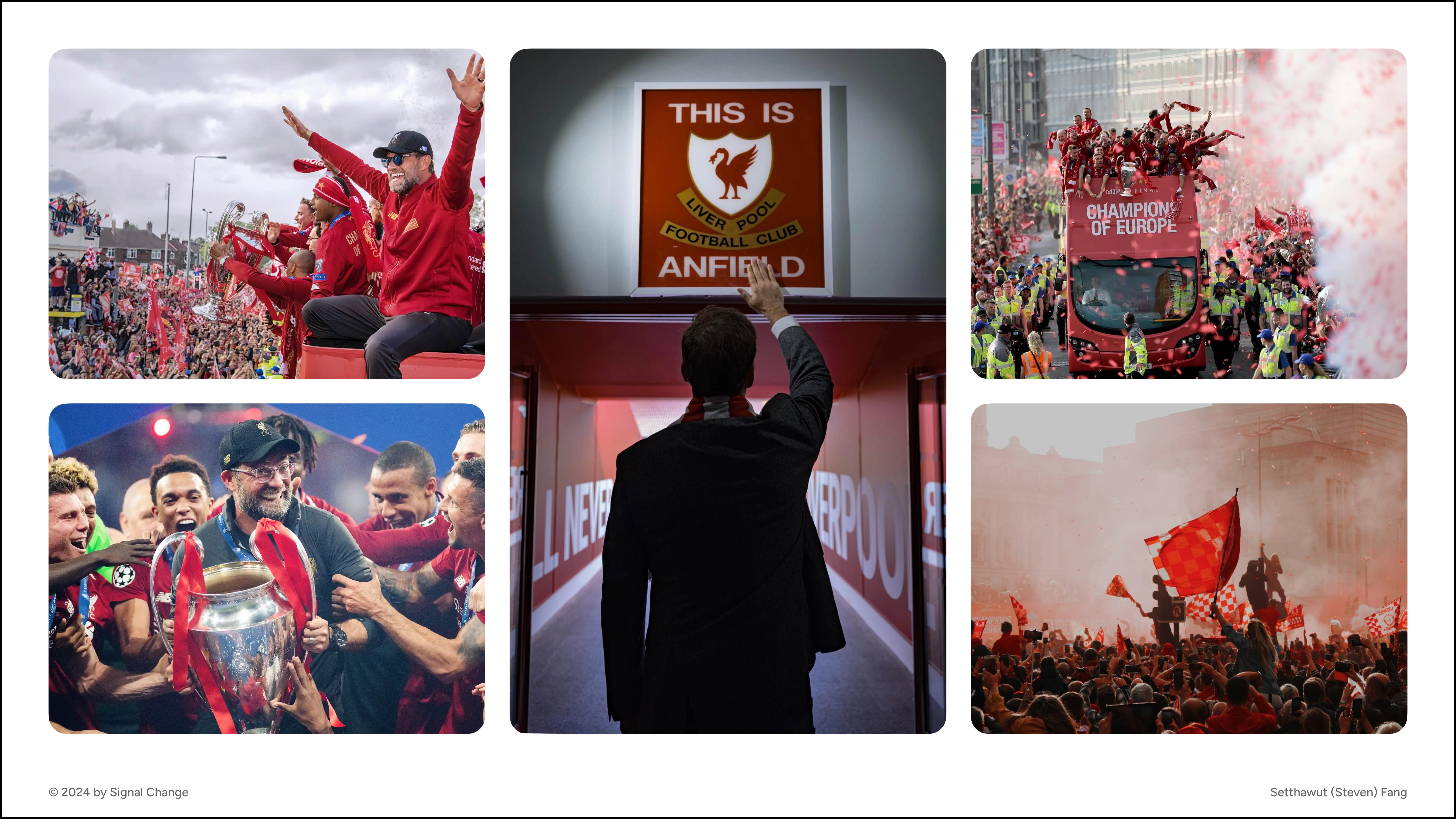
During the Jurgen Klopp’s era, spanning over eight and a half years, Liverpool Football Club has undergone a remarkable transformation. From a team struggling to secure a top-four position in the league, they have emerged as consistent contenders in major tournaments, claiming numerous trophies and delivering extraordinary performances that have left an indelible mark on European football.
Many memories were built through this incredible journey. The Anfield night miracle comeback against Barcelona in the 2019 UEFA Champions League and to went on to lift the club’s sixth European cup. The thrilling 4-3 comeback against Borussia Dortmund in the 2016 Europa League. The record-breaking 7-0 thrashing of Manchester United in 2023. The 96th-minute winner against Everton in the Merseyside derby in 2018. The dramatic 95th-minute winner in a hard fought 5-4 victory against Norwich City in 2016. And of course, the incredible 2019/2020 title-winning season, ending the 30-year wait for Liverpool to lift the English Premier League trophy.
Looking ahead, the new Liverpool manager, Arne Slot, faces a daunting challenge in producing the same level of success that the club experienced under Jurgen Klopp's leadership. With the full support of the club and its fans behind him, expectations are high for achieving outstanding results and winning more trophies.
From doubters to believers. Danke Jürgen.
Thanks for reading,
Steven
If you enjoyed this reading…
📥 Don’t forget to subscribe (If you haven’t already done so), so you won’t miss out on anything!
❤️ Like the post
💬 Share your thoughts down in the comment section below.
🦋 Refer Signal Change to your the people in your circles.
🙏 If you find the content valuable, consider paid subscription to Signal Change to gain access to exclusive contents that are only available to the paid subscribers. There are group discounts, gift options, and referral rewards available.
☕️ Support me by buying me a couple cups of coffee as a token of appreciation.